
What is Yin Yang?
~ Most people are familiar with the black and white Taijitu (Tai-Ti-Chu) symbol.
~ Opposites complete the whole; as in one half cannot exist without the other.
A classic example would be Light & Shadow Without light, there can be no shadow. Shadow only exists because light reveals it.


~ Yin & Yang is everything and everywhere.
~ Yin & Yang inside the body – Yin is the hard tissues like bones, ligaments, tendons, fascia!!, and these organs: Kidneys, Liver, Heart, Lungs and Spleen. Yang is the soft tissues, blood, muscles, and the Bladder, Gallbladder, Small Intestine, Large Intestine and Stomach.
~ Qi is the ‘current’ between the two opposites, the Yin side and Yang side.
~ In Yin and Yang Yoga we ‘enable’ the Qi to reach both Yin and Yang tissue. We also turn our focus in a Yin way and a Yang way too!
~ You could say that Yoga is a way of uniting both the Yin and the Yang.
Understanding Yin Yang Yoga and the Meridian System If you've ever explored Eastern wellness practices, like Acupuncture or Hatha Yoga you've probably heard about meridians. But what exactly are they, and how do they relate to your yoga practice?
The Energy Highway System
In Traditional Chinese Medicine, there's a belief that energy called Qi (pronounced "chee") flows through your body much like blood travels through your veins. When this energy flows freely, you feel vibrant and healthy. But when the flow gets blocked or disrupted, that's when you might experience discomfort, tension, or even illness. This is where practices like acupuncture, tai chi, Yin and Yang yoga come in. They're all designed to restore and balance this vital energy flow.
~ Think of meridians as the superhighways that Qi uses to travel throughout your body.
~ Specific pathways that connect to your organs and systems, directing energy where it needs to go.
~ Your body has 12 major meridians also called channels.


Yin Yang Yoga
When you practice Yang yoga with dynamic, strong postures and moving sequences you're actively pumping Qi through these meridian channels. The muscular engagement, heat building, and movement clear blockages and get energy moving vigorously through your body.
On the flip side, Yin yoga takes a different approach. By holding passive stretches for longer periods (usually 3-5 minutes), we're applying gentle, sustained pressure to specific areas of our body, allowing Qi to flow along and into connective tissue, joints, ligaments and organs. While Yang practice activates and mobilises energy, Yin practice allows Qi to penetrate, settle, and essentially heal.
Together, Yin and Yang yoga create a complete practice that honors both the active and receptive qualities of your energy system, keeping your meridian channels clear, coherent, and flowing smoothly.


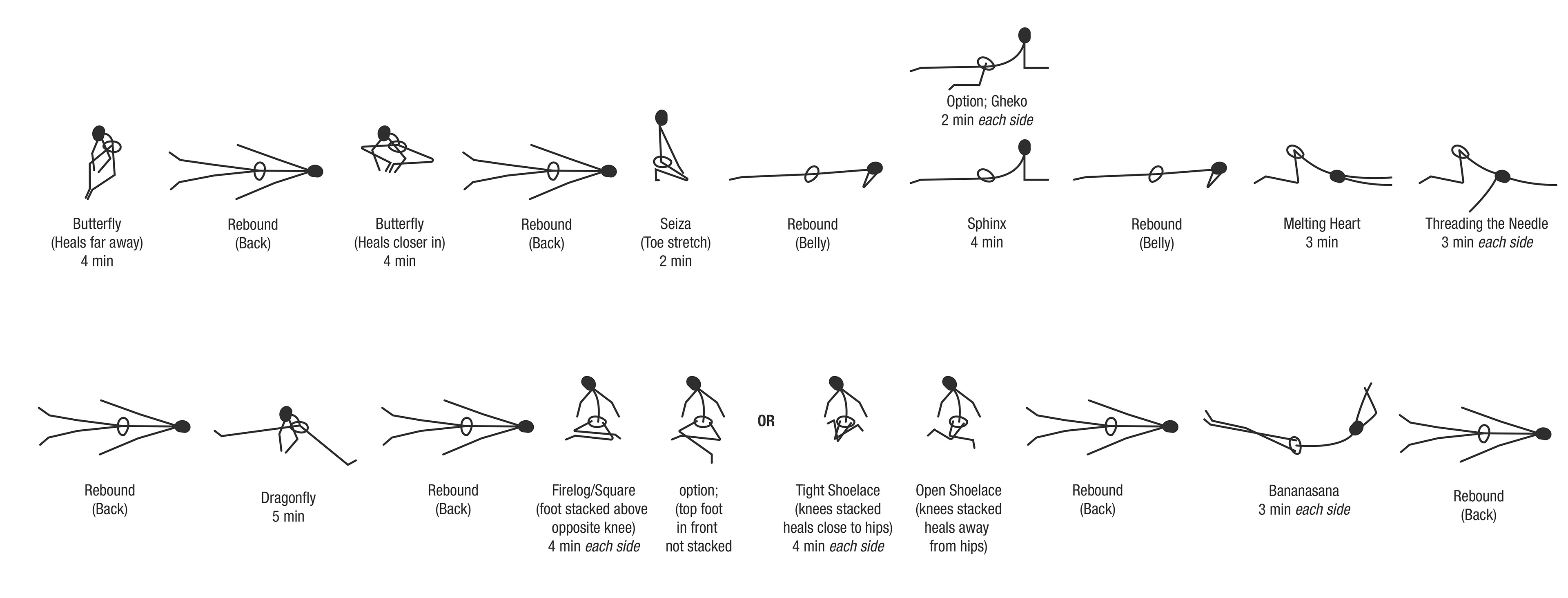
What to expect from a Yin Yang Yoga class
~ Expect to arrive at your own centre, to focus on tuning into yourself.
~ The practice follows an unhurried, therapeutic approach, combining gentle yet effective breathing techniques with yoga postures. The deliberate pace allows students to turn their attention inward while stimulating the flow of Qi (chee), the body's bioenergetic intelligence or life force energy.
~ Through Yin and Yang yoga postures and breath-work, you'll activate Qi flow along the meridian channels, supporting organ vitality and nourishing both Yang and Yin tissues.
~ Classes are suitable for levels.
~ I encourage the use of props, such as yoga blocks, yoga pads, yoga straps, bolsters or rolled up towels to enable ease and reduce stress. The postures are sha pes provided as a guide, working with your own mobility is how we create space for Qi to flow.